
The Internet's Most Complete Backflow Prevention Resource
Everything You Need to Know
About Backflow Preventers
All in One Place
• State laws • Certified tester directories • Annual testing costs • Repair guides • Manufacturer model lists • Monthly regulatory news • All 50 states, 250+ cities, built for property owners, facility managers, and water industry professionals.
Why Annual Testing Matters
A failed backflow preventer puts contaminated water into the drinking supply — silently, invisibly, until someone tests it.
50
states with mandatory backflow testing programs
$175–$350
typical annual test cost per assembly
30 days
typical repair window after a failed test
Backflow Testing & Repair
What to expect, how long it takes, what it costs, what happens when an assembly fails, and how repairs work — the complete service guide.
Backflow Laws by State
State-specific regulations, tester certification requirements, utility programs, and compliance deadlines — all 50 states in plain language.
Find a Certified Tester Near You
Vetted, utility-registered, certified backflow assembly testers across 250+ cities. Every listing screened before it goes live.
Why GetYourBackflowTested.com
The Most Complete Backflow Prevention Resource on the Internet
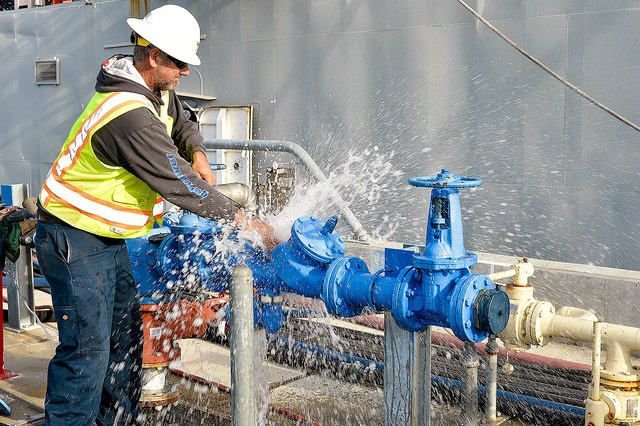
Most backflow websites give you a generic overview and a phone number. We go deeper than anyone else — combining state regulatory expertise, utility-level program knowledge, vetted tester directories, and the technical depth that practitioners actually need.
Whether you’re a homeowner who just received a compliance notice from your water utility, a facility manager overseeing backflow testing across a multi-state commercial portfolio, or a certified tester tracking regulatory changes in your state — this is the resource that was built specifically for you.
50-State Regulatory Coverage
Every state's backflow laws, tester certification pathways, major utility programs, and recent regulatory changes — with source citations and direct links.
Six-Point Tester Vetting
Every listed tester is screened for current state certification, utility registration, calibrated equipment, insurance, platform access, and confirmed local coverage.
Real, Metro-Specific Pricing
Residential, commercial, fire protection, and emergency testing price ranges by metro — not vague "call for a quote" placeholders.
Monthly Industry News
Contamination events, manufacturer recalls, law changes, utility platform updates, and enforcement actions — the backflow news nobody else tracks.
Deep Technical References
RPZ vs. DC vs. PVB explained. Complete manufacturer and model lists. Rebuild kit guides. What failed test results actually mean and how to fix them.
State law guides with utility-level detail
City tester directories across the U.S.
Vetting criteria applied to every listed tester
Monthly
Regulatory and industry news updates
Backflow Testing & Repair Services
Everything You Need to Know About Getting Your Backflow Preventer Tested

Annual backflow testing is required by law for any property with a testable backflow prevention assembly. Here’s how the process works, what it costs, and what happens when something goes wrong.
How Backflow Testing Works
A certified tester connects calibrated differential pressure gauges to your assembly's test cocks, verifies check valve and relief valve operation, and files a signed report with your water utility — typically in 20–45 minutes per assembly.
RPZ Backflow Preventer Testing
Reduced Pressure Zone assemblies are the highest-protection type and the most common device on commercial and irrigation services. Learn what's tested, what commonly fails, and what repair typically costs.
Irrigation Backflow Testing
Irrigation systems are the #1 source of compliance notices nationwide. Every irrigation connection to a public water supply requires an approved backflow preventer — tested annually in most states.
Commercial Testing Requirements
Commercial properties face the strictest requirements — annual testing, hazard-based assembly type selection, utility-registered testers, and electronic report filing through platforms like BSI Online, VEPO, and SwiftComply.
What Happens After a Failed Test?
A failed test starts a compliance clock — typically 15–30 days depending on your state and hazard level. We explain what the failure means, what repair involves, and how to avoid the same failure next year.
Freeze Protection
Above-grade assemblies in cold climates need insulated enclosures or seasonal winterization. Freeze damage is one of the most common — and most preventable — causes of backflow assembly failure.
Backflow Prevention Fundamentals
The Three Types of Testable Backflow Prevention Assemblies
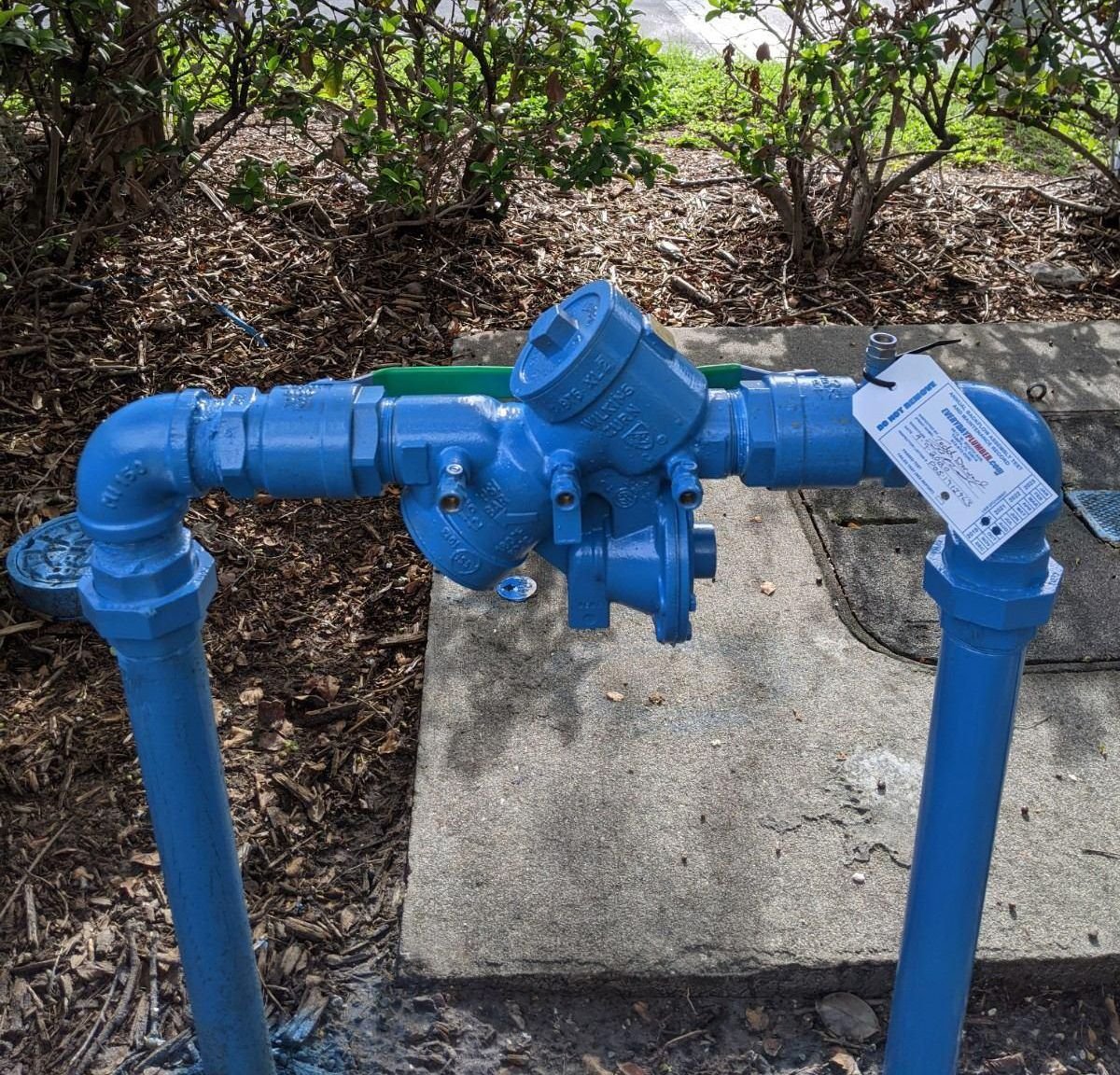
Not all backflow preventers are the same — and the type you have determines your testing frequency, required assembly specifications, repair costs, and which regulations apply.
RPZ / RP / RPBA — ASSE 1013
Reduced Pressure Zone Assembly
The highest level of testable backflow protection. Contains two independently acting check valves and a differential pressure relief valve that vents to atmosphere if either check fails. Required at health-hazard cross-connections involving toxic substances, chemicals, fertilizers, reclaimed water, or fire suppression with chemical additives.
- Commercial irrigation with chemical or fertilizer injection
- Hospitals, labs, medical and healthcare facilities
- Industrial, manufacturing, and chemical processing
- Fire suppression systems with chemical additives or antifreeze
- Any connection with potential toxic contamination
- Containment at service line entrance for high-hazard accounts
DC / DCVA — ASSE 1015
Double Check Valve Assembly
Two independently acting, spring-loaded check valves in series. Used at non-health-hazard (pollutant-level) cross-connections where contamination risk is lower. Commonly specified for residential and commercial irrigation without chemical injection, and fire sprinkler systems without antifreeze or chemical additives.
- Residential and commercial irrigation (no chemicals)
- Fire sprinkler systems without antifreeze or additives
- Boilers with non-toxic corrosion inhibitors
- Commercial service connections at lower-hazard facilities
- Containment protection where pollutant-level hazard is identified
PVB / PVBA — ASSE 1020
Pressure Vacuum Breaker Assembly
Protects against backsiphonage only — not backpressure. Cannot be used where downstream pressure can exceed supply pressure. Must be installed at least 12" above the highest downstream outlet. The most common assembly type on residential irrigation systems. Note: some states now allow triennial testing for PVBs on residential irrigation.
- Residential lawn and garden irrigation (most common use)
- Light commercial irrigation without chemical injection
- Applications with zero backpressure risk
- Where jurisdiction accepts PVB in lieu of RPZ for irrigation
Backflow Laws by State
Backflow Prevention Laws Vary Dramatically by State — Know Yours Before You Get a Notice

There is no single federal backflow prevention standard. Every state administers its own program — with different tester certification requirements, different accepted credentials, different assembly approval lists, different filing windows, and different enforcement consequences.
A tester who is certified and accepted in California may be legally prohibited from submitting test reports in South Carolina. A 30-day repair window in most states becomes 14 days in Massachusetts and 10 days in Louisville, Kentucky. And regulatory changes happen every year — Virginia added a new mandatory DPOR certification in 2023 that voided all non-compliant test reports. Colorado overhauled its program in January 2024. North Carolina changed residential irrigation testing frequency in September 2024.
Our state law pages go beyond general summaries. Each covers the specific administrative code or statute, the state tester certification program, accepted credentials, the major water utility programs with their unique requirements, recent regulatory changes, and direct links to the authoritative sources.
Notable State-Specific Requirements:
VA — Virginia
DPOR certification mandatory since Jan 1, 2023. Any test report submitted by a non-DPOR-certified tester is legally void, regardless of when the test was performed.
SC — South Carolina
No reciprocity with ABPA, ASSE, or AWWA. SCDES-issued certification only — national credentials are not accepted, with no exceptions.
NJ — New Jersey
Requires both annual pressure testing AND a mandatory internal inspection (physical disassembly of the assembly) within 6 months of permit renewal.
IL — Illinois
Plumbing license PLUS IDPH backflow tester endorsement both required. National credentials alone are legally insufficient in Illinois.
WI — Wisconsin
Mandatory biennial commercial surveys and decennial residential surveys required statewide under NR 810.15 — the most comprehensive survey mandate in the U.S.
NY — New York
PE/RA plan approval required before any installation. Licensed Master Plumber signature required on all test forms. 5-year assembly rebuild recommended.
Jump to Your State's Backflow Laws:
| Backflow Laws in | Backflow Laws in | Backflow Laws in | Backflow Laws in | Backflow Laws in |
|---|---|---|---|---|
Find a Certified Backflow Tester Near You
We Vet Every Tester in Our Directory — So You Don't Have To
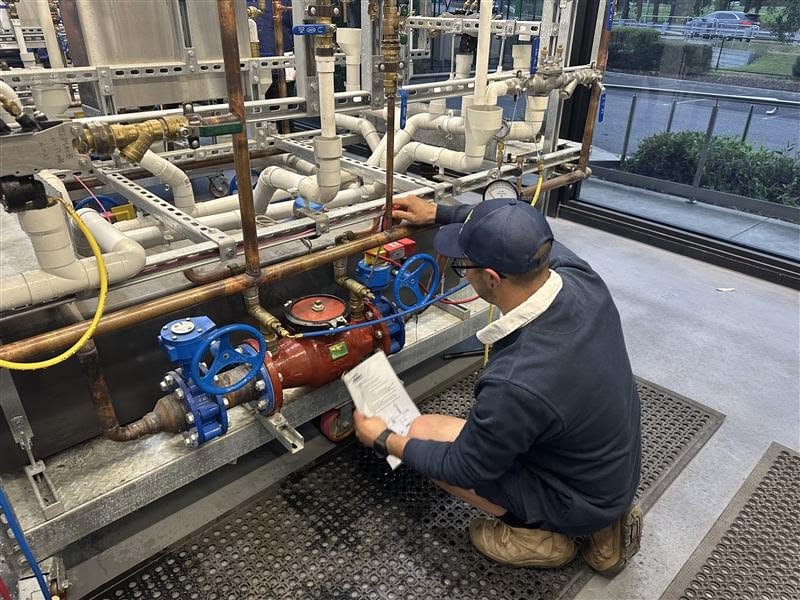
Finding a backflow tester is not difficult. Finding one who is currently certified by the right agency, registered with your specific water utility, using calibrated test equipment, properly insured, and actually available in your area — that’s harder than most property owners expect.
Hiring a tester who isn’t utility-registered means your test report gets rejected and you’re still out of compliance — even though you paid for a test and someone showed up. Hiring one with an expired calibration means the same thing in states like Wisconsin, which require test kit calibration within the prior 12 months.
Every tester in our directory has passed six specific checks before their listing goes live. We cross-reference against state certification databases directly — not just what testers self-report. We confirm utility registration because holding a credential doesn’t mean you can file results with a specific utility. And we confirm the tester actually serves the metro area where they’re listed, which matters more than most people realize in rural and suburban markets.
Our 6 Tester Vetting Criteria:
Current state certification
Verified against the state's published tester database, not self-reported credentials alone.
Utility registration
Confirmed in good standing with the specific water utility for the listed service area.
Calibrated test equipment
Differential pressure gauge calibration current within the prior 12 months.
General liability insurance
Coverage verified at or above local utility minimum requirements.
Digital platform access
Registered with the utility's required submission platform (BSI Online, VEPO, SwiftComply, AquaResource, etc.) where applicable.
Active local coverage
Confirmed the tester actually serves the metro or county where they are listed, not just that they hold credentials.
Popular Cities — Find Certified Backflow Testers Near You
Southeast & Mid-Atlantic
Northeast
Midwest
South & Southwest
Backflow News & Updates
Monthly Backflow News — The Developments That Matter to Your Property

Laws change. Utilities update their platforms. Manufacturers issue recalls and field notices. Water systems face enforcement actions. None of it reaches most property owners through any single channel — until now.
Every month we publish news covering confirmed contamination events, manufacturer product notices and assembly recalls, state and local law changes, significant enforcement actions, and utility platform and technology developments. We source to primary documents — not summaries — and we correct the record when early reporting changes.
For facility managers and property owners in multiple states, the law changes section is particularly valuable. We report changes before the compliance notices arrive.
Recent Developments
LAW CHANGE
North Carolina SB 166 (Sept 2024) reduced residential irrigation backflow testing from every 2 years to every 3 years. Commercial assemblies remain annual.
PLATFORM UPDATE
San Antonio Water System adopted BSI Online for all backflow test submissions effective December 1, 2024. Paper and direct submissions no longer accepted.
LAW CHANGE
Virginia DPOR certification became mandatory for all backflow testers effective January 1, 2023. Test reports from non-DPOR-certified testers are legally void in Virginia.
PORTAL REQUIREMENT
East Providence, Rhode Island required all backflow test submissions through the RPZ Flow online portal effective April 1, 2026.
LAW UPDATE
Colorado updated its cross-connection control requirements effective January 1, 2024 — one of the most significant state-level backflow program expansions in years.